
Unilever: Pioneering Innovation and Sustainability in Global Consumer Goods

History and Global Expansion
Unilever’s journey began with the merger of two pioneering companies: Lever Brothers in the United Kingdom and Margarine Unie in the Netherlands. The merger was strategically motivated to create a stronger international presence and leverage complementary expertise in soap and margarine production. Over the decades, Unilever expanded globally, establishing subsidiaries and manufacturing plants across Europe, Asia, Africa, and the Americas.
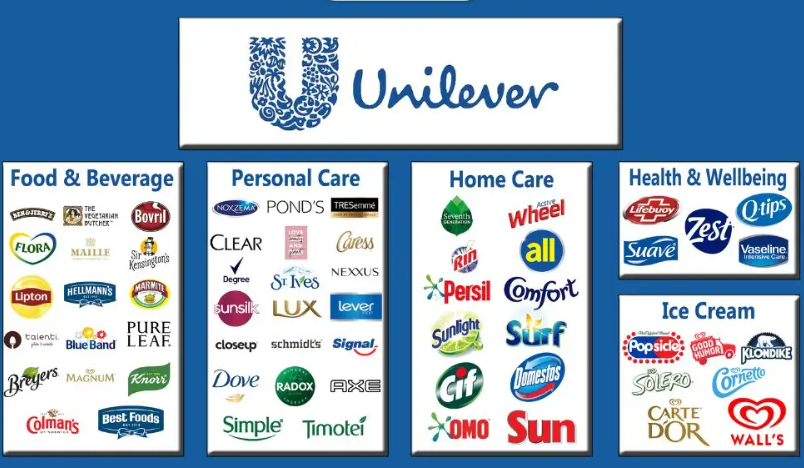
Throughout the 20th century, Unilever became a symbol of innovation in consumer goods. The company diversified its product offerings and strengthened its supply chains, ensuring high-quality products for millions of consumers. Today, Unilever operates in over 190 countries and maintains a portfolio of more than 400 brands, ranging from personal care products like Dove and Lux to food brands such as Knorr, Lipton, and Ben & Jerry’s.
Brand Portfolio and Product Excellence
Unilever’s diverse brand portfolio is one of its greatest strengths, catering to various consumer needs across different markets. Key categories include:
- Personal Care: Includes globally recognized brands such as Dove, Axe/Lynx, Rexona/Sure, Lux, and Vaseline, known for quality and innovation.
- Food and Beverages: Popular brands like Knorr, Hellmann’s, Lipton, Ben & Jerry’s, and Magnum deliver taste, nutrition, and enjoyment to consumers worldwide.
- Home Care: Includes brands such as Surf, Omo, Sunlight, and Domestos, providing effective and sustainable cleaning solutions.
- Beauty and Wellness: Brands like Sunsilk, Pond’s, and Simple focus on skincare, haircare, and health-conscious products.
Unilever’s product development focuses on consumer needs, scientific research, and sustainable sourcing. This approach ensures that every product meets high standards of quality, safety, and efficacy, strengthening customer trust globally.
Commitment to Sustainability and Corporate Responsibility
Unilever is widely recognized for its commitment to sustainability and corporate social responsibility. The company’s approach, known as the Unilever Sustainable Living Plan (USLP), aims to improve health and well-being, reduce environmental impact, and enhance livelihoods across its value chain. Key initiatives include:
- Reducing Environmental Footprint: Unilever focuses on lowering greenhouse gas emissions, reducing water usage, and promoting renewable energy in production and distribution.
- Sustainable Sourcing: Commitment to sourcing raw materials such as palm oil, tea, and soy sustainably, ensuring ethical supply chains and protection of ecosystems.
- Community Engagement: Programs that support education, hygiene, and economic empowerment, especially in underserved communities.
- Responsible Packaging: Developing recyclable, biodegradable, and minimal packaging solutions to reduce plastic waste.
Through these initiatives, Unilever demonstrates that large-scale business operations can be compatible with sustainability and social responsibility, creating long-term value for consumers, communities, and the planet.
Innovation and Technology
Innovation lies at the heart of Unilever’s success. The company invests in research and development to create products that meet evolving consumer preferences. Unilever’s innovation strategy includes:
- Developing eco-friendly and health-conscious products that cater to global trends.
- Utilizing digital technologies and data analytics to understand consumer behavior and personalize marketing.
- Introducing new product formats, packaging solutions, and fragrances to enhance the consumer experience.
- Collaborating with scientific institutions and startups to pioneer breakthroughs in nutrition, skincare, and cleaning technology.
These innovations reinforce Unilever’s reputation as a forward-thinking company that continuously adapts to changing markets while maintaining product excellence.
Global Impact and Market Leadership
Unilever operates across six continents, impacting the lives of millions of consumers daily. Its global footprint enables it to set industry standards in product quality, sustainability, and social responsibility. By leveraging scale, research, and consumer insights, Unilever delivers value while promoting ethical practices and environmental stewardship.
Furthermore, Unilever has played a role in promoting fair trade, women’s empowerment, and community development projects worldwide. Its global influence is not only commercial but also social, demonstrating how corporations can contribute positively to society.
Corporate Awards and Recognition
Unilever has received numerous accolades for its products, sustainability efforts, and corporate responsibility. Awards include recognition for ethical supply chains, environmental impact reduction, innovation in consumer goods, and leadership in sustainability. Such accolades highlight Unilever’s ongoing dedication to excellence and reinforce its positive reputation in both business and social spheres.
Future Outlook
As global markets evolve, Unilever continues to focus on innovation, sustainability, and consumer engagement. Future strategies include:
- Expanding digital marketing and e-commerce platforms to connect with consumers worldwide.
- Developing climate-positive and carbon-neutral products.
- Enhancing supply chain transparency and sustainable sourcing practices.
- Investing in health, wellness, and environmentally responsible products that align with changing consumer preferences.
By balancing business growth with environmental and social responsibility, Unilever aims to remain a trusted, influential, and forward-looking global brand.

Unilever’s journey from a merger of two European companies to a global consumer goods leader reflects vision, innovation, and social commitment. With an expansive portfolio of trusted brands, a dedication to sustainability, and a focus on innovation, Unilever continues to enhance the quality of life for millions worldwide. Its commitment to responsible business practices and long-term value creation positions Unilever as an exemplary model of how corporations can lead in both business success and societal impact.